Nobody opens a renewal notice hoping for good news. But lately, for a lot of American drivers, that envelope has felt more like a punch. No crash. No ticket. And the premium went up anyway.
Your rate was never just about you. Insurers price on repair costs, medical inflation, theft rates, and weather claims in your ZIP code. A fender bender three counties over can nudge your bill.
That is frustrating. It also means there is plenty you can control, because insurers reward drivers who make themselves cheaper to cover.
What drivers are paying in 2026
The national average for car insurance in the U.S. was about $188 a month ($2,254 a year) as of September 2026, according to Experian. Full coverage averaged $243 a month; minimum liability coverage averaged $132 a month.
The spread by state is enormous. Vermont drivers pay around $115 a month for full coverage. Maryland drivers pay roughly $352. Same country, triple the price.
There is one piece of good news: after years of steep increases, rates have flattened. U.S. motor-vehicle insurance inflation fell to near zero in early 2026. Premiums have, for now, stopped climbing.
9 ways to bring your premium down
1. Shop around at every renewal
This is the single highest-leverage move, and most people skip it. Insurers reprice their risk models constantly. The company that was cheapest two years ago may be the priciest today.
Comparing quotes from three to five insurers at each renewal can cut 10 to 30 percent off a premium, per rate analyses. It takes about 20 minutes on a comparison site. Set a reminder two weeks before renewal — your insurer is counting on you auto-renewing blind.
2. Raise your deductible
Moving your deductible from $500 to $1,000 can cut collision and comprehensive premiums by a significant margin.
The condition: you need that $1,000 actually sitting in savings. If a claim would wreck your month, keep the lower deductible. This move suits people with an emergency fund.
3. Bundle your policies
Insuring your car and your home — or even a renters policy — with the same company typically earns a 10 to 20 percent multi-policy discount. One phone call, no behavior change.
Renters policies are cheap, often under $20 a month, and bundling one with auto still triggers the discount. It frequently pays for itself.
4. Try telematics (usage-based insurance)
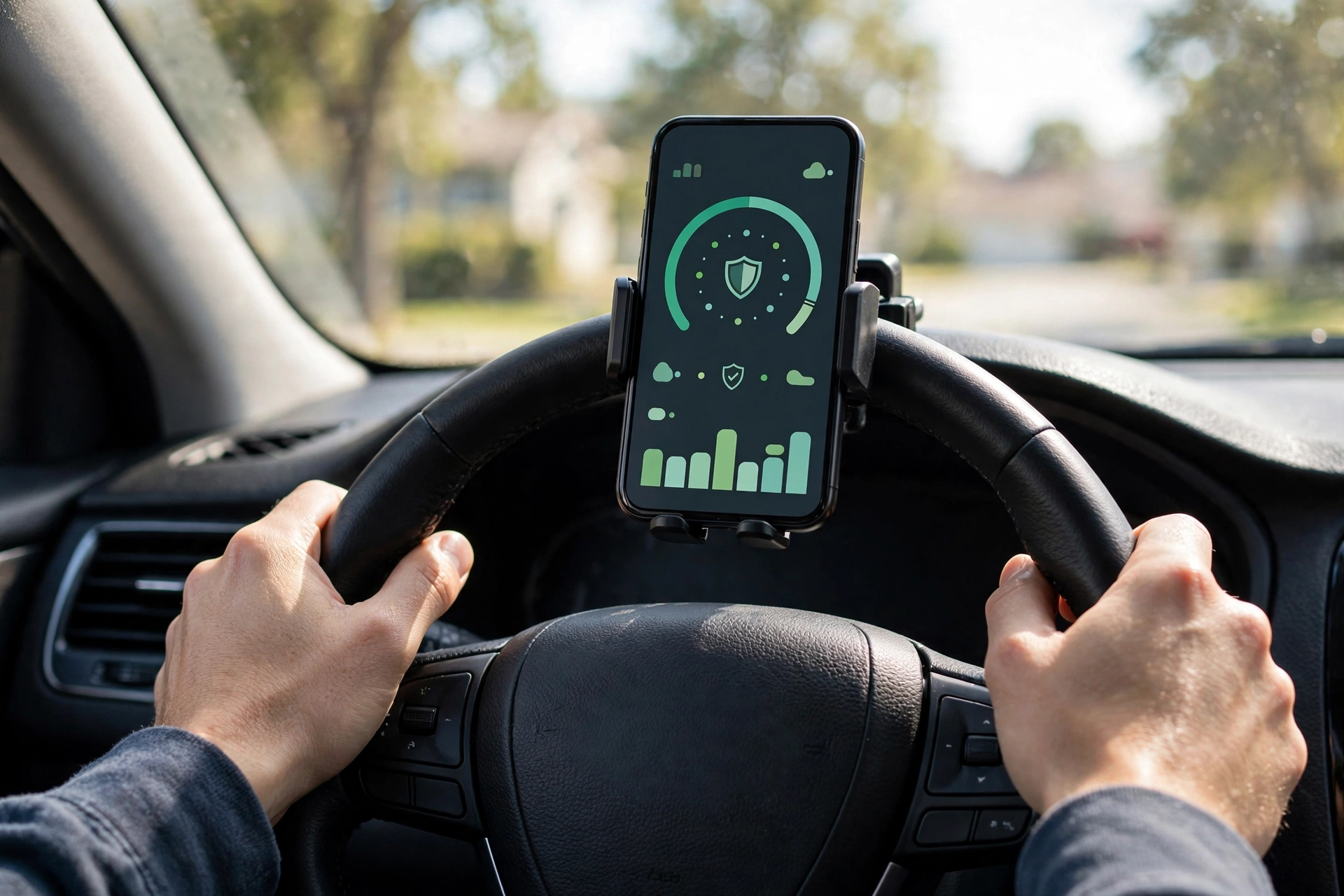
Programs like Progressive’s Snapshot, Allstate’s Drivewise, and State Farm’s Drive Safe & Save track braking, speed, mileage, and late-night driving through a phone app. Typical savings run 10 to 20 percent, with the safest low-mileage drivers reaching higher, per telematics data.
Best candidates: drivers under 10,000 miles a year, daytime drivers, smooth brakers. If you brake hard or drive at 2 a.m., skip it — some programs can raise your rate.
5. Keep your credit healthy
In most states, insurers use a credit-based insurance score to help set rates. Better credit generally means a lower premium — often by hundreds a year.
Three states ban the practice: California, Hawaii, and Massachusetts. Everywhere else, paying bills on time and keeping card balances low quietly pulls your premium down. Slowest strategy here, but it compounds.
6. Ask about discounts you are not getting
Do not assume your agent applied everything. Call and ask directly:
- Good student discount — usually for drivers under 25 with a B average or better
- Pay-in-full discount — paying six months upfront instead of monthly
- Paperless and autopay discounts — small, but they stack
- Low-mileage discount — if you work from home, say so
- Defensive driving course — a few hours online; the discount can last years
One call can uncover hundreds in savings.
7. Drop full coverage on an older car
Full coverage makes sense while the car is worth protecting. The rule of thumb: once a car’s market value drops to a few thousand dollars, compare the annual collision + comprehensive premium against the realistic claim payout (value minus deductible).
Paying $800 a year to insure a $4,000 car is usually bad math. Check the value, do the subtraction, and do not insure nostalgia.
8. Report lower mileage
Fewer miles means less risk. If you shifted to remote work or your commute shrank, update your estimated annual mileage. Many insurers have low-mileage tiers under 7,500–10,000 miles a year, and drivers routinely forget to report the change.
9. Keep your record clean
A single speeding ticket can raise a premium substantially for three years; a DUI far more. Beyond safety, every clean year is money. If you do get a ticket, check whether traffic school can keep it off your record.
What not to do
Do not gut liability limits to the state minimum to save a few dollars a month. Minimums are shockingly low in some states — one serious accident and you are personally liable for the rest.
Do not lie on your application. Misstating mileage, address, or household drivers is insurance fraud. If discovered after a claim, the insurer can deny it.
Do not let coverage lapse. Even a brief gap flags you as high-risk and inflates your next quote. Maintain continuous coverage, even when switching companies.
The bottom line
No single trick halves a premium. But stacking three or four of these — comparing quotes, raising the deductible, bundling, trying telematics — can realistically save an average driver several hundred dollars a year.
Start with the quote comparison. Everything else builds from there.
Frequently asked questions
What is the cheapest way to lower car insurance?
Comparing quotes from multiple insurers at every renewal. It takes about 20 minutes, costs nothing, and routinely cuts 10 to 30 percent off a premium — more than any single discount.
Does raising my deductible really save money?
Yes. Moving from a $500 to a $1,000 deductible meaningfully lowers collision and comprehensive premiums. Just make sure you have the higher amount saved, since you pay it out of pocket on any claim.
How much can telematics save me?
Most drivers save 10 to 20 percent with usage-based programs like Progressive’s Snapshot or State Farm’s Drive Safe & Save. The safest, lowest-mileage drivers can save more — but aggressive or late-night drivers should skip it.
Does my credit score affect my car insurance rate?
In most U.S. states, yes — insurers use a credit-based score when setting rates, and better credit usually means a lower premium. California, Hawaii, and Massachusetts ban the practice.