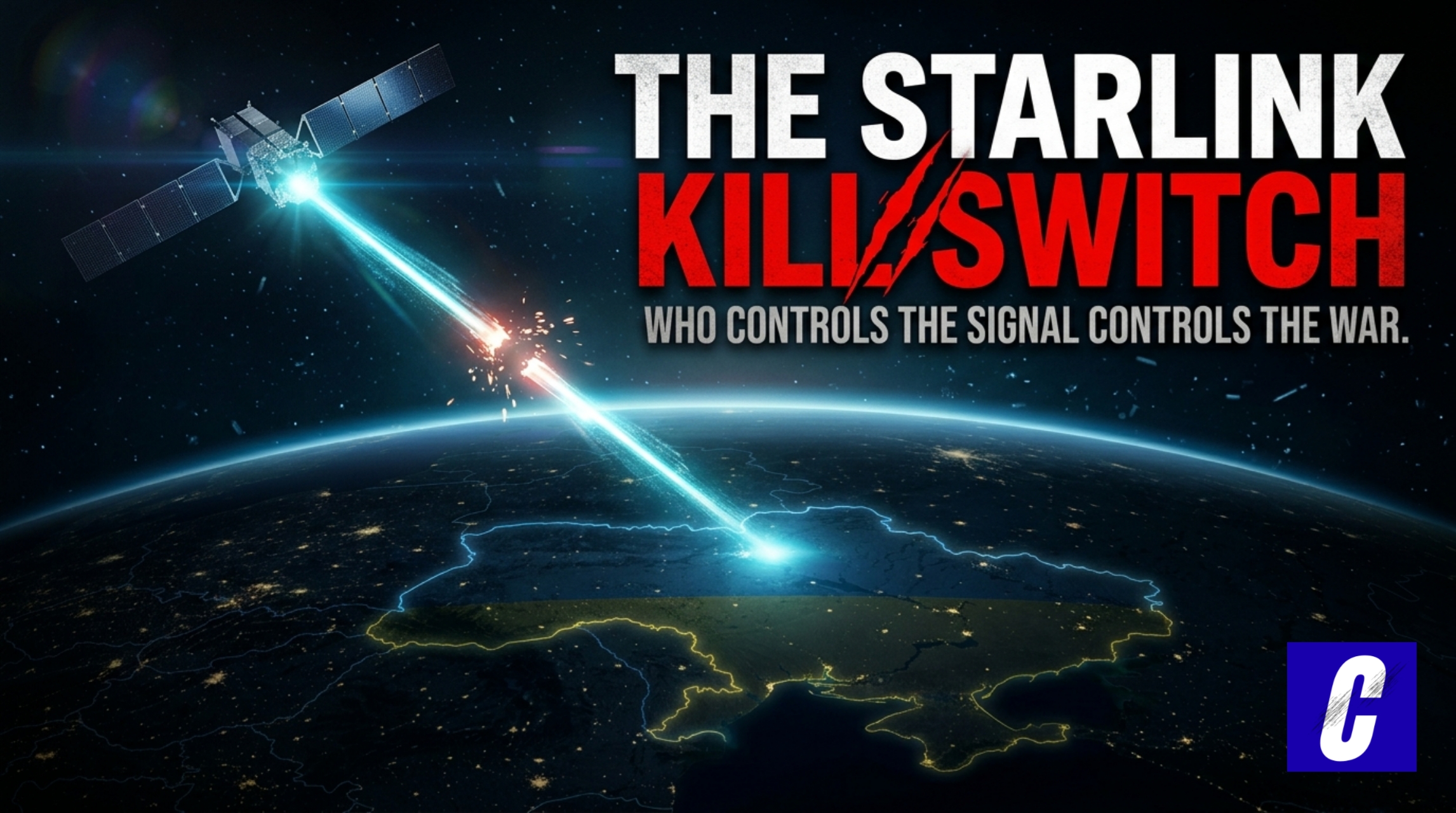
Here’s the thing about relying on someone else’s satellites: they can slow down your war from an office in California.
That’s essentially what happened to Ukraine today. SpaceX reportedly slapped a speed cap on Starlink — including the military-grade Starshield terminals — killing the connection for anything moving faster than about 160 km/h. No warning. None. Ukrainian drone units and air-defense interceptors suddenly couldn’t talk to their own hardware in the middle of fighting off jet-powered Shahed drones.
Kyiv isn’t buying the “technical glitch” story. Officials have flat-out linked the throttling to politics in Washington. SpaceX, for its part, hasn’t said a word.
How Throttling Hits Tactical Defense
When you strip away the jargon, here’s what a speed limit on satellite internet actually does to a war:
Your weapons answer to a boardroom. Ukraine’s targeting and telemetry run on software policies written thousands of miles away. Let that sink in: Poland alone spends roughly $50 million a year funding nearly 30,000 Starlink terminals for Kyiv — real money, real hardware — and it still bought them zero control over whether the service works when it matters. Your defense doctrine bending to someone else’s terms of service. That’s the deal.
Blind spots, instantly. A hard speed cap doesn’t degrade high-speed interceptor drones. It turns them off. While Russian missiles are in the air. Infrastructure and cities just… sit there.
There’s no backup plan. When American feeds go dark, Europe can’t fill the hole. Chatham House researcher Marc DeVore put it about as plainly as it gets — on the US Space-Based Infrared System that detects ballistic launches, he said: “There is nothing equivalent in Europe.” Nothing. That’s the whole sentence.
The Warning for India and the Global South
This isn’t just a Ukraine problem. It’s a preview — and a lot of countries are about to sign the same contract.
Take India. Starlink already has its GMPCS licence and IN-SPACe authorisation. What’s stuck is the commercial rollout: spectrum allocation, Home Ministry security clearances, gateway-site checks, lawful-interception compliance. And honestly? That friction exists for a reason. Satellite broadband would be a genuine lifeline for border regions and rural outposts. But letting a foreign-owned constellation into your strategic and dual-use corridors is a different conversation entirely.
Hand your communications to an offshore kill switch and you’re one diplomatic fight away from going dark.
What to Watch Next
Three things will decide where this goes:
- What SpaceX and the Pentagon say. Will they confirm the 160 km/h cap? And will they call it a contract clause, an export-control thing, or a policy decision? The wording matters enormously.
- Whether Europe finally builds its own thing. Warsaw has real leverage here — watch for emergency shifts to Eutelsat’s OneWeb or fast-tracked money for the EU’s delayed IRIS² constellation.
- India’s spectrum call. Does New Delhi look at this mess and tighten the screws — stricter ring-fencing, mandatory domestic routing, slower approvals for Starlink? Wouldn’t bet against it.
The Verdict: Sovereignty With an Asterisk
Modern defense can’t be outsourced. Full stop.
India’s gateway-localization and lawful-interception rules are a solid baseline for commercial broadband. But a dual-use network that can be throttled by a software update from California? That’s not sovereignty. It’s sovereignty with an asterisk.
Until countries build their own LEO constellations and control their own encryption, foreign satellite providers should be kept strictly away from military, border, and critical infrastructure corridors. Walled off. No exceptions.
So where do you land — should foreign LEO constellations be banned from defense and critical corridors outright, or can local gateway rules actually defuse the kill-switch risk? Let’s argue about it in the comments.